
YAEJI, MASTER OF MISFITS
After a Breakout Year in 2018, the Singer and DJ Sits Down with Performer Victoria Sin to Talk Language, Community

In the summer of 2017, I was high on acid in the middle of Victoria Park in London. Lying on the grass looking up at the sky, I was taken to another dimension as a friend played me Yaeji’s song “Feel It Out” for the first time. Like a lot of Yaeji’s music, it had an introspective quality that spoke to the experience of being on the outside looking in, or the inside looking out—a feeling that’s hard to pin down but familiar to many people who grew up straddling cultural lines.
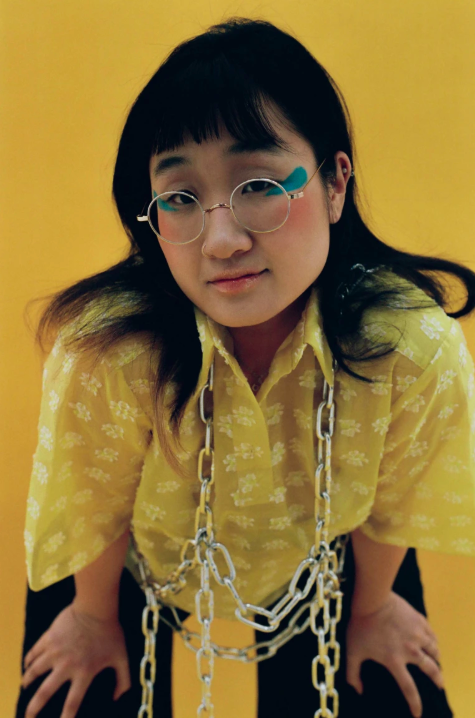
When we sit down to talk for the first time since the One More tour, we speak about the ways that never quite fitting in—culturally, socially, linguistically, sonically, emotionally—drive us to create the work and communities we want to see and be part of.
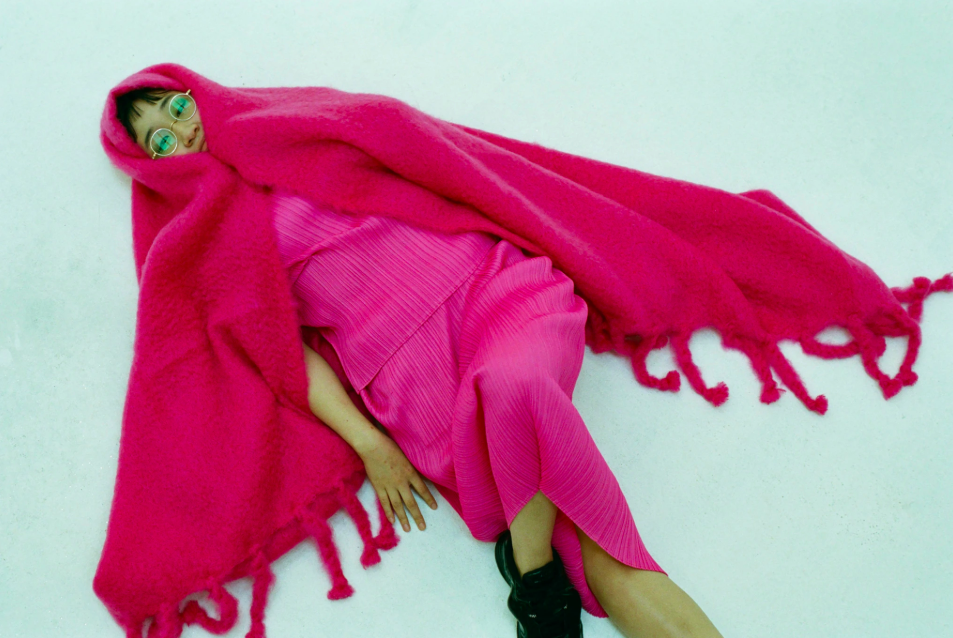
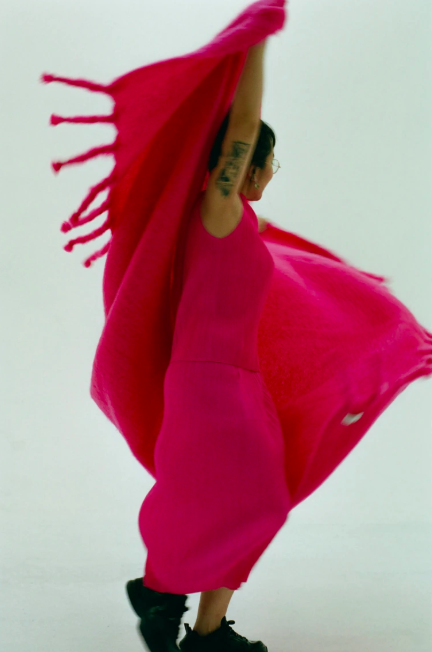
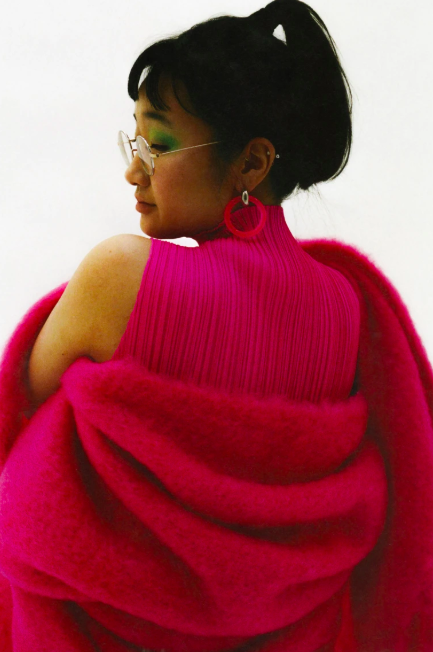
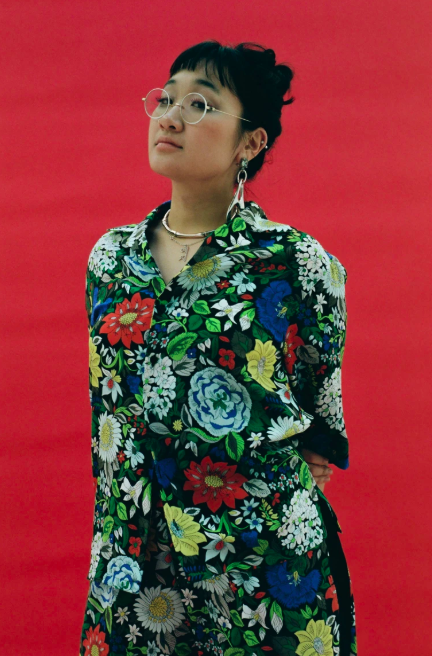
Yaeji
Do you relate your experience of being culturally outside of categories to being musically outside of categories?
That’s something that I’ve thought about in my work and my life, but haven’t been able to verbally process and explain. Sonically I have a lot of different interests. Growing up I didn’t have a real life community where I would share bands and artists with friends. I was always kind of on my own because in America I could listen to Britney and stuff, but then moving to Korea, all the western pop or mainstream music that was coming over to Korea was a few years delayed, because it was kind of like pre-internet, and I wasn’t able to connect with K-pop. So I ended up listening to songs that no one else listened to. When I started taking music more seriously, that’s when I realized that my taste in music is sonically and aesthetically in-between, but I love all the in-betweens of everything.
Do you think that your music changes as the community around you changes?
Yeah, because personality-wise I’m like a sponge. Growing up I didn’t really have a lot of friends. I had a tough childhood in terms of meeting people. So that’s why I relied on the internet to find music. But by going to school, joining the [Carnegie Mellon student] radio, moving to New York, and finding this underground community, now I have peers around that deeply influence me. I love them and I think they’re so special because I’ve never had this connection before. But even though it was hard for me to find friends when I was younger, I think that in other ways I was still very lucky with the people around me, I have a really loving family. They’re Korean and they were born and raised in Korea in a different generation, so there’s a lot of things that they don’t get about me, which is sometimes frustrating, I’m sure you might have experienced this.
NIKE × OFF-WHITE: FRESH “AIR”
Four Days in London with Nike and Virgil Abloh.
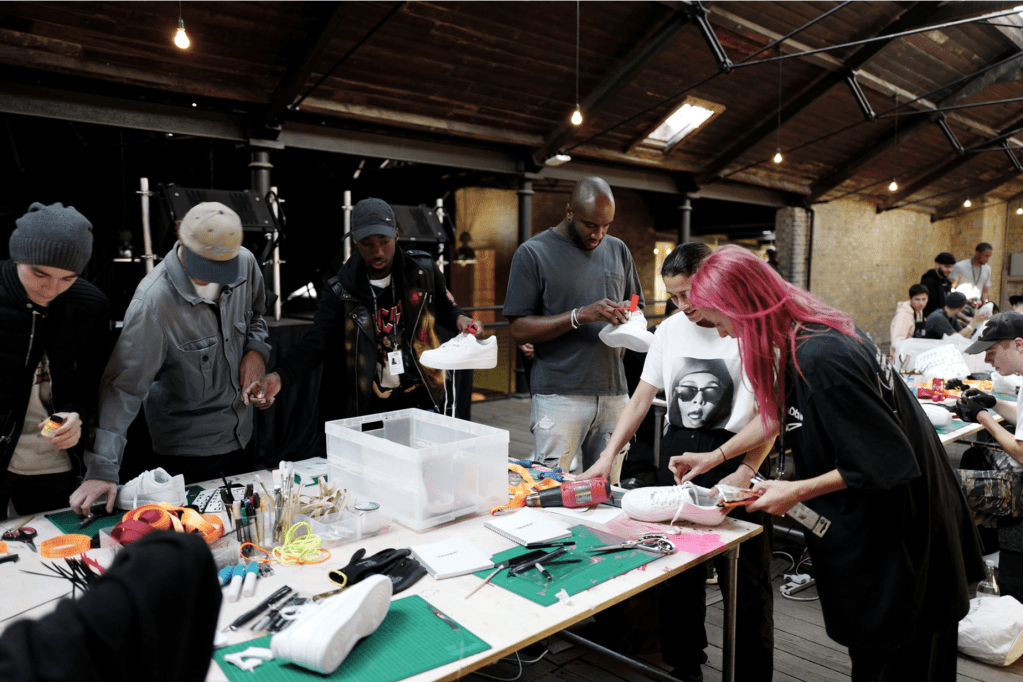
Is streetwear-as-scholarship just the newest mutation of experiential branding?
And, even if it is, does that prevent it from providing legitimately meaningful experiences for its participants?
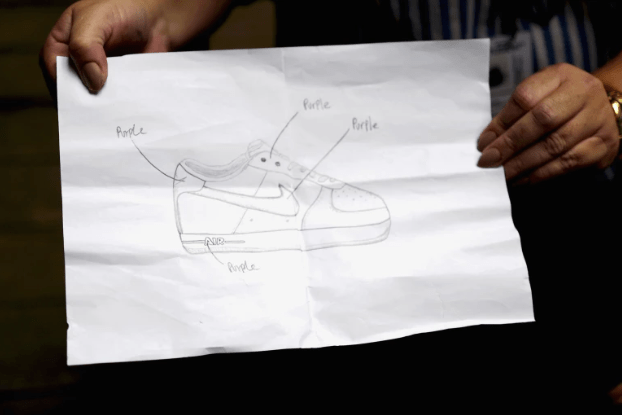
The “Ten” collaboration—10 ultra-limited Nike sneakers ranging from foundational totems
like the Jordan 1 to future classics like the Vapormax,
all reworked by Abloh. Held in New York City and London.
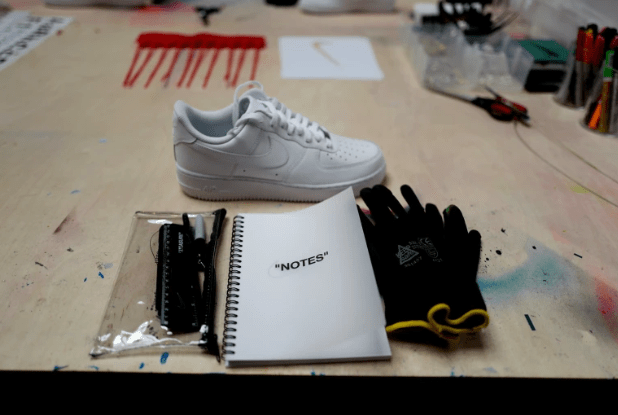
the machinations of contemporary branding. Until I saw Abloh’s Jordan 1,
it had never exactly occurred to me that Nike owns ‘air’—the result of nearly
30 years of relentless branding, design, and production.
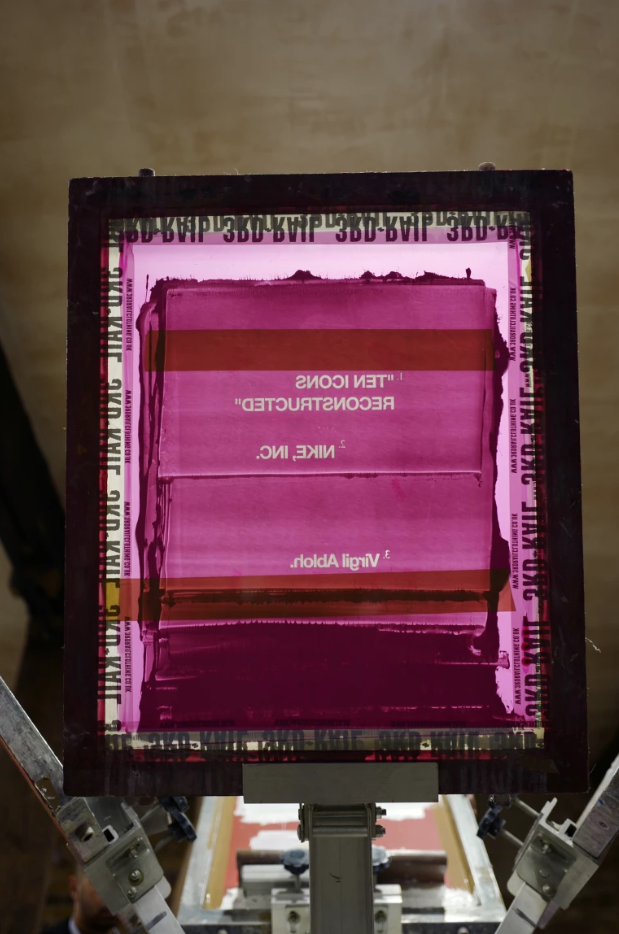
of engagement between brand and consumer. With his Off-White project,
Abloh jumpstarted the era of participatory branding. Just as Nike honed in on something utterly
ubiquitous and made it their own, Abloh created Off-White’s visual identity by
taking the diagonal hash marks found on infrastructure
and institutional signage worldwide and folding them into his own cosmology.
 T.F.T.I